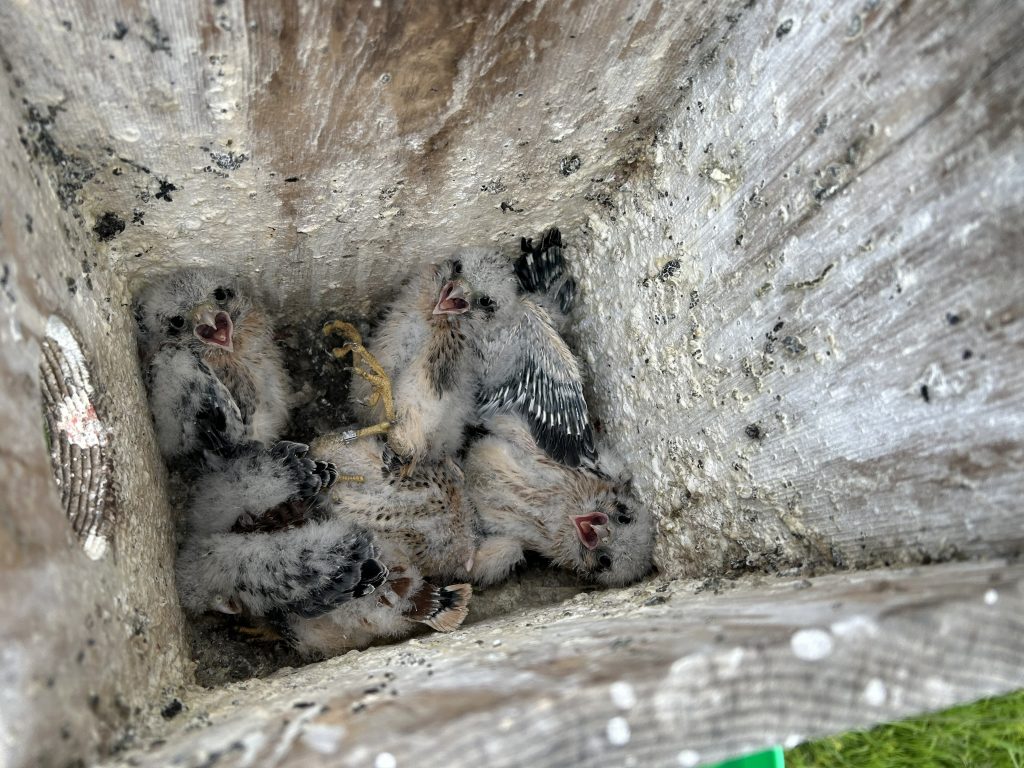
Our 11th season of monitoring American Kestrel Nest boxes in the greater Sax-Zim Bog ecosystem has come to an end. This season started out with a big change for our project and ended with some great successes!
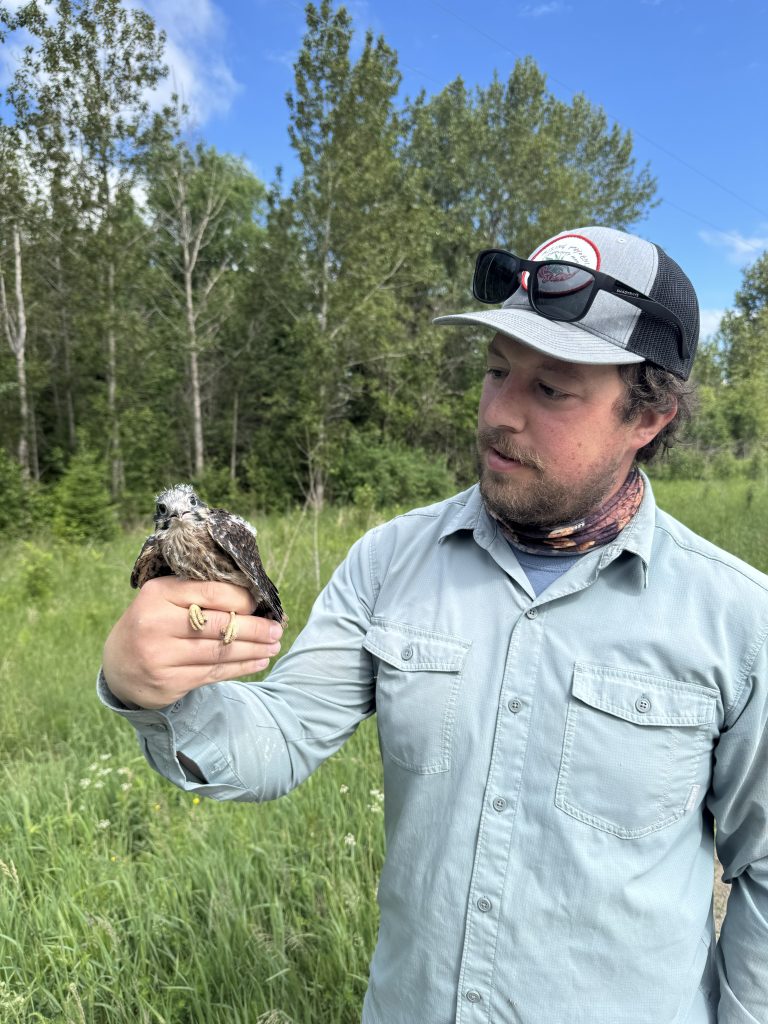
Over the course of this project, we have made several changes to help improve how data is collected and to best support the birds choosing to nest in our boxes. At the start of the project we made a change on the way we monitored boxes. Initially, volunteers would spend a few minutes near a box making notes on any adults nearby, note any adult kestrels leaving the boxes as they approached, and they would document any visits to the nest made by those adults. This was not a very successful way to monitor our boxes. So, we changed it up and by using a GoPro we could record what was inside the box, giving us a better idea of occupancy and, crucially, gave us the opportunity to plan our banding visits more accurately!
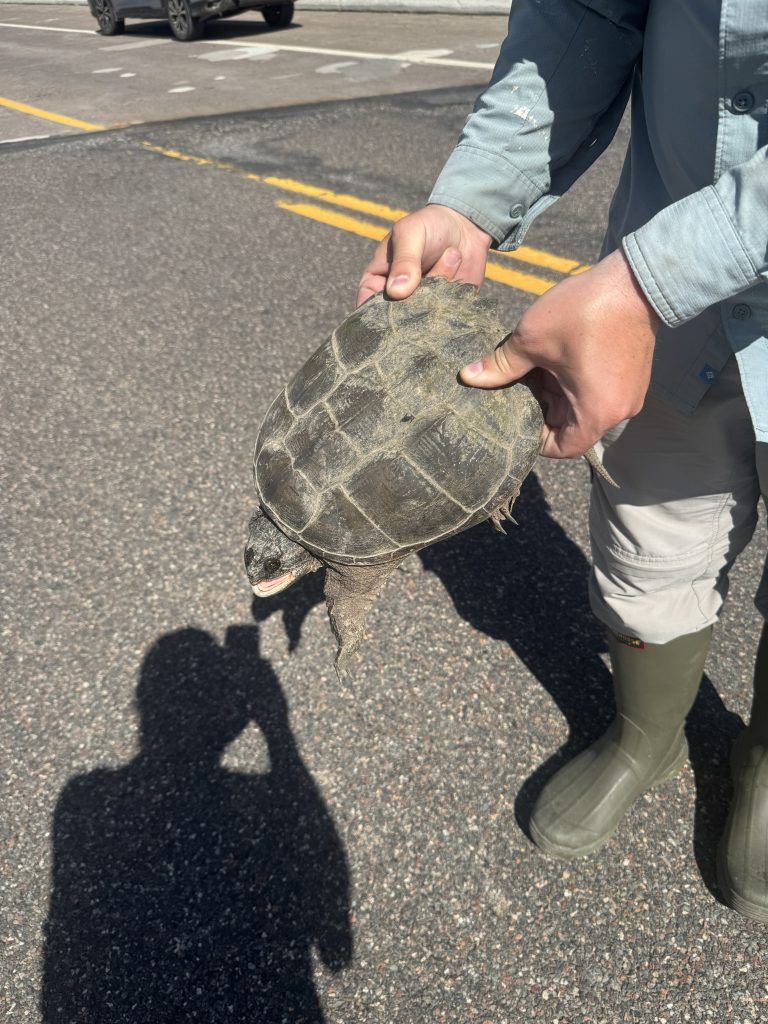
This year, the big change was removing boxes from the landscape. During this project, some boxes get used every year, while others have never been used since they were placed on the landscape. Prior to this year’s nesting season, we removed around a dozen boxes from the landscape. This allowed us to replace and repair boxes in locations that are used regularly, as well as making the routes our volunteers run a little quicker to complete. One important part of running a project like this is to make sure the nest boxes to be used are safe to use for birds! It was nice to fix a few lids, replace a few side panels, and even remove old boxes to replace with our extras.
We also had quite a surprise during box removal. Not only did we have a flying squirrel leap out of a box when we were climbing the ladder to remove said box, but we also were lucky to have a Northern Saw-whet Owl actively nesting in one of the boxes! We were able to document 5 eggs and a few voles stashed inside the box. Unfortunately, this box was predated.
After we had completed the box removal and repair, we were left with 38 useable boxes remaining on the landscape! This is down from our peak of 52 boxes, with 49 boxes useable last year after one box was blown off of its supports halfway during the nesting season. However, this is a much more manageable number of boxes for our volunteers and we were looking forward to a hopefully productive nesting season!
…. And a productive season it was!
Of the 38 useable boxes on the landscape, we had 26 boxes occupied, with 22 boxes fledging chicks! This is a 68% occupancy rate, with an 85% success rate. These numbers are nearly the same as last season and the 4 nest failures is the lowest number of nest failures since 2021. We were able to band 92 chicks this year, with 98 chicks produced. With 92 chicks banded this year, we have now banded 715 nestling American Kestrels in the Sax-Zim Bog! The total of 92 chicks banded is also the 3rd most productive season we have documented since the project began in 2016. Our boxes averaged 4.4 chicks per nesting attempt, which is the 3rd highest ever and the best average since 2019.
Another interesting tidbit from this season was the high number of male kestrels hatched this year! Our long-term average has skewed towards female birds being hatched (somewhere around 54% female). However, this year we noticed lots of males as we were banding. Was that a fluke? Were we just noticing more males, when perhaps this was normal? Well, after running the numbers… it was not a normal year! In fact, 62% of the chicks banded this year were males! Why were there this many males hatched this year? We don’t know!
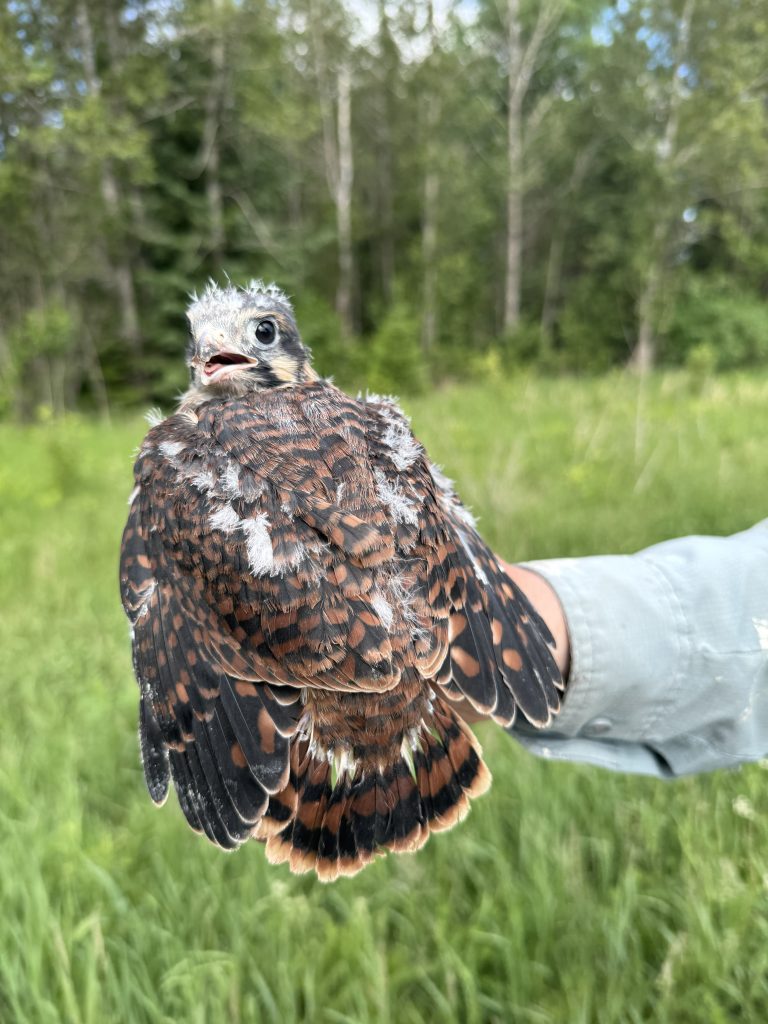
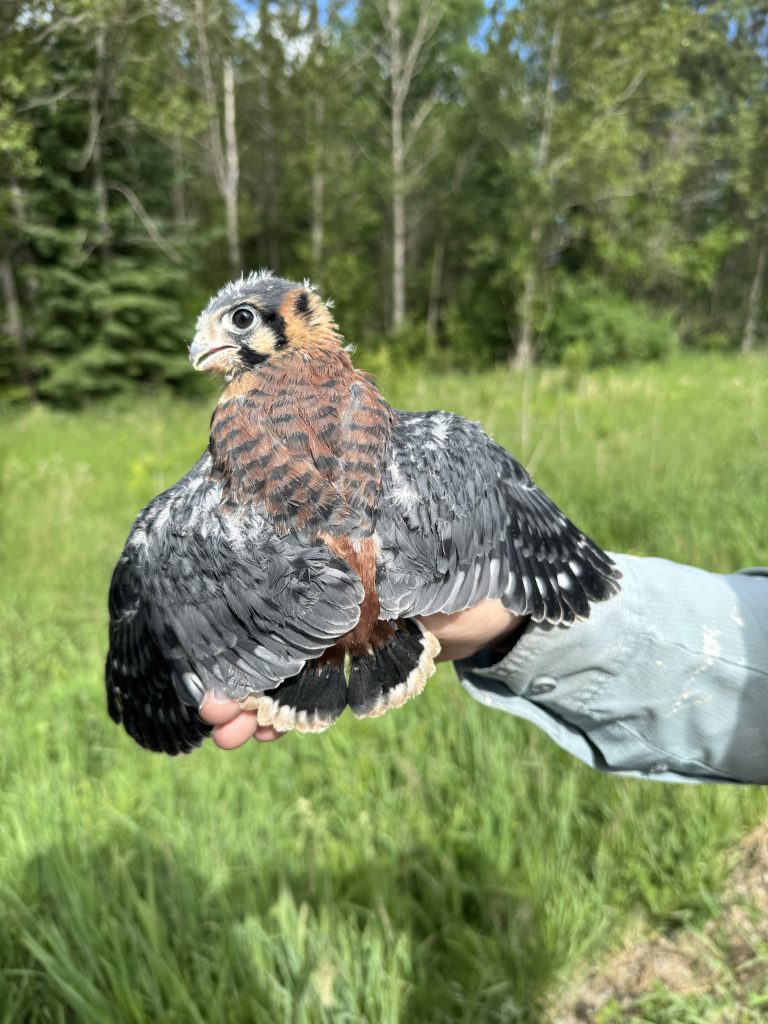
Some years we don’t get to band every chick (some fledge earlier than we expect and some might not be good enough body condition to band). This year, we had both scenarios apply! As we were banding the final box of the season, one of the chicks in the box was half the size of its siblings and the decision was made to not band this bird due to its health. Perhaps this bird will survive, but it isn’t likely, so we didn’t disturb it.
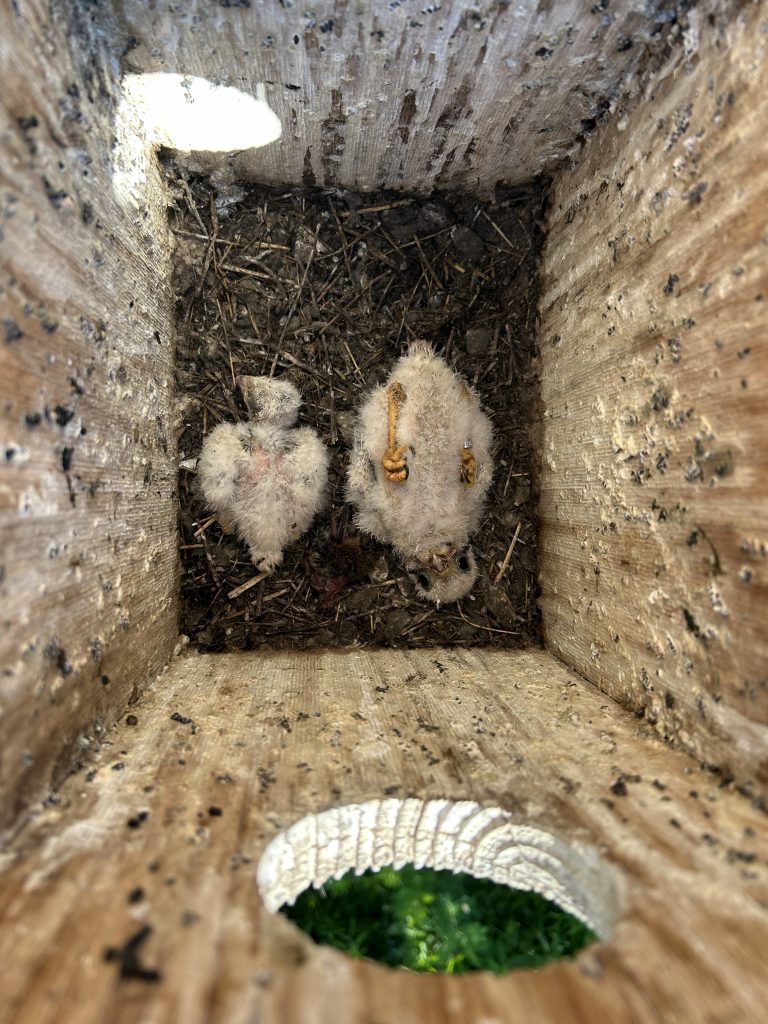
There is still some American Kestrel Nest box work to be done this year! This year we will be doing a full cleaning of all of the boxes on the landscape, as well as complete some minor repairs noted during banding. We try to clean out our boxes every 3-5 years. As with repairs, cleaning out the boxes every so often makes sure our occupants have safe locations to raise their nestlings! This is a messy process and involves lots of trips up and down ladders. The last time we cleaned out boxes, we found some interesting things, including the leg of a Long-eared Owl (not predated by kestrels, but likely brought into the box by a critter scavenging a dead Long-eared Owl over the winter)! We will be sure to update you after this year’s cleaning if we find anything interesting!
This is an enjoyable project and we are so happy to be able to support American Kestrels through nest boxes in the region! And importantly, this project cannot happen without the support and efforts by our volunteers! Thank you to Jean and Susan; Sue, Rubin, and Brian; Jessica and Dawn; Jeri and Josef; and Welcome Center Host/Naturalist Kelly for your efforts this season!
–Head Naturalist Clinton