
Home | About Sax-Zim Bog | Why is the Sax-Zim Bog so special?
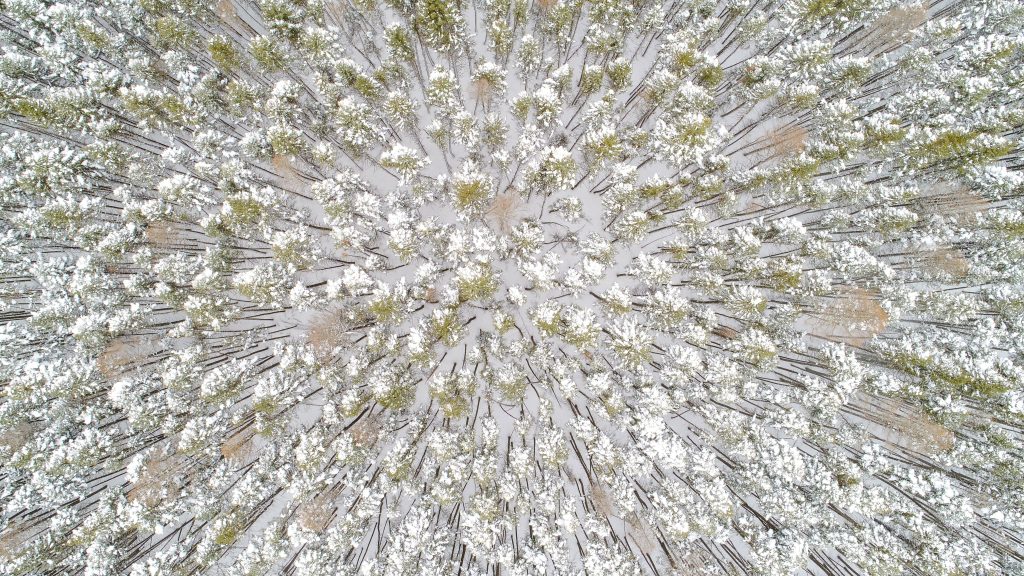
Long known among serious birders as THE place to find northern owls and finches in winter and warblers and other boreal birds in summer, the Sax-Zim Bog is a “magic mix” of habitats that attracts a unique array of species not found in other parts of the United States.
Encompassing an area of more than 300 square miles that spans from Zim in the north to nearly Floodwood in the south, and from the Toivola Swamp east to Stone Lake and US HWY 53, the land within these loose boundaries contains not only black spruce and tamarack bog, but upland aspen/maple forests, floodplain forest, sandy upland pine stands, rivers, lakes, farms, meadows, and towns. This is the magic mix that makes the area so attractive to so many different species. Great Gray Owls, for example, can find the large tracts of unbroken bog forest they require for nesting, but also the open meadows they need for hunting Meadow Voles in winter.
The Sax-Zim Bog is prime habitat for bog specialists including the aforementioned Great Gray Owl, Black-backed Woodpecker, Boreal Chickadee, Canada Jay, Yellow-bellied Flycatcher, and Connecticut Warbler. On top of this you can find grassland species like LeConte’s Sparrow, Sharp-tailed Grouse, Sedge Wren, Bobolink, and Brewer’s Blackbird during the summer months, with Northern Shrikes, Rough-legged Hawks, and sometimes Snowy Owls using those same habitats during the winter. The riverine forests of the St. Louis and Whiteface Rivers may not hold much attention during the winter, but are home to hard to find species in northern Minnesota like Wood Thrush, Great Crested Flycatchers, Scarlet Tanagers, and increasing Yellow-throated Vireos during the summer months.
But it’s not just birds. Friends of Sax-Zim Bog Head Naturalist Clinton Dexter-Nienhaus has been compiling a list of all species seen in the greater Sax-Zim Bog ecosystem, and the list has crested 4,300 species and continues to grow. Included in this “Bogdiversity” is over 900 species of moth, over 580 species of plants, trees, and shrubs, 283 species of fungi, over 180 species of spider, 94 species of dragonfly and damselfly, 86 species of butterfly… just to name a few!
Every year we get visitors that wish to experience some of this non-bird biodiversity, through specific visits, or by attending field trips and education events like our BioBlitz!
Named for the towns of Sax and Zim, Minnesota, the Sax-Zim Bog was created following the last glacial retreat in Minnesota around 10,000 years ago. Glacial Lakes Upham and Aitkin (just southwest of Glacial Lake Upham) were created following the retreat of glaciers and the resulting melt water. These glacial lakes are responsible for the creation of the Cloquet, St. Louis, and the Upper Mississippi Rivers, as well as many of the bog habitats in southwestern St. Louis County and Aitkin County. Because of the low and relatively flat topography of the Glacial Lake Upham lakebed, the greater Sax-Zim Bog area remains a wet and poorly drained area today. This wetland characteristic has made the area challenging for agricultural development and settlement, but has created a unique habitat for certain plants and animals. Interestingly, Glacial Lake Upham is also responsible for the sandy upland forests and small lakes in the Sax-Zim Bog!
Fast-forward a few thousand years, to the visit of a traveling preacher to the area in June of 1963. He was zipping down CR7 when he saw a football-shaped bird perched atop a roadside snag. He hit the brakes and jumped out and couldn’t believe his eyes; not one, not two, but SIX owls. It was a family group of Northern Hawk Owls and one of the first documented nesting in the entire Lower 48! His discovery tuned the eyes and ears of birders toward the Sax-Zim Bog. Word spread to the Minnesota Ornithologist’s Union and a few folks came up each year to bird, mainly in winter (including our Executive Director Sparky, who first birded Sax-Zim Bog in 1983).
But what really put the Bog on the map was the great owl irruption of 2004-05 when hundreds of Great Gray Owls and Northern Hawk Owls descended on the area due to a nearly complete lack of voles farther north in Canada. Dozens of Great Grays could be seen in a single day, far more than expected from the presence of resident owls in the area.
The unprecedented irruption was impetus for Duluth bird guide Mike Hendrickson and the town of Meadowlands to join up and create the Sax-Zim Bog Winter Bird Festival in 2008. It was a great success and continued through 2020. Then Facebook happened. All of a sudden it seemed to that there was a Great Gray on every other tree and photographers came in even larger numbers. Photographing a Great Gray is a bucket-list item for many, and seeing one for the first time is an emotional experience.

The Bog was designated an Important Bird Area (IBA) by Bird Life International and Audubon Minnesota, but this designation carries no protections. This is why Sparky Stensaas, Dave Benson, and Kim Eckert founded Friends of Sax-Zim Bog in 2011. The organization’s Mission to “Preserve and Protect the Greater Sax-Zim Bog” has led us to purchase over 25,000 acres of lowland Black Spruce bog in the area.
A logged stand of Black Spruce bog takes 80 to 120 years to reach full maturity. That is basically a lifetime, and our goal is to ensure these rare and rarely seen boreal species have a permanent home in Sax-Zim. Many of the species listed above depend on large tracts of undisturbed bog: Great Gray Owl, Northern Saw-whet Owl, Long-eared Owl, Northern Hawk Owl, Black-backed Woodpecker, Canada Jay, Boreal Chickadee, White-winged Crossbill, Connecticut Warbler, Cape May Warbler, Pine Marten, Fisher, Bobcat and Moose.
The Friends of Sax-Zim Bog built the Welcome Center on Owl Avenue completely with local labor and materials in the winter of 2013-14. The involvement of local folks has been very gratifying to the development of our organization. With their help, not only have we built the Welcome Center, but have now completed three bog boardwalks. Area residents and visitors alike have really enjoyed the boardwalks and trails.
Because of this rich diversity Sax-Zim Bog draws thousands of birders, photographers, and naturalists annually from the U.S. and across the globe. 5,559 folks from 45 states and 14 countries (Estonia, Australia, Russia, India and more) stopped by the Welcome Center during the winter of 2019-20. Most come to see and photograph the unique bog birds, mammals and orchids, but the Great Gray Owl is high on almost everybody’s list. Fortunately, the Sax-Zim Bog is easily accessed from Minneapolis or Duluth and, unlike many remote peatlands, it has roads allow access to this special habitat. Fifteen percent of all Minnesota visitors come from the Iron Range (17 percent from Duluth, 24 percent from greater Minnesota and 44 percent from the Twin Cities).
And these tourists spend money in the area. A survey of visitors from 2018 to 2020 found that the average birder/photographer was here for 2.6 days and spent $473 dollars in the Sax-Zim/Duluth area during their trip. This extrapolates to $1.18 million pumped into the local/regional economy over a single winter!
Other local projects that Friends of Sax-Zim Bog participates in include providing “Good Neighbor Grants” to those local projects that are open to visiting birders (such as bird feeding stations), field trips that are open to all, and providing boardwalks and trails for hiking.
Bogs are often dismissed as just useless “swamps,” but they are much more. They are home to an amazing and surprising biodiversity. From rare orchids, moose and wolves, owls, and the myriad of the “winged jewels” we call warblers, bogs are incredibly important. Peatlands (the encompassing term for bogs, fens) are found around the globe in northern latitudes…from Alaska to Scandinavia to Siberia and are globally important carbon sinks and pockets of biodiversity. Bogs in the Lower 48 are most abundant in Minnesota (6 million acres!) and extend south to Illinois. Sax-Zim Bog and lowland spruce forests that extend south into Aitkin County are probably the largest bog habitat at the southern end of the boreal forest. Cotton, Minnesota has a treasure in its backyard and we thank you for sharing it with the world.
