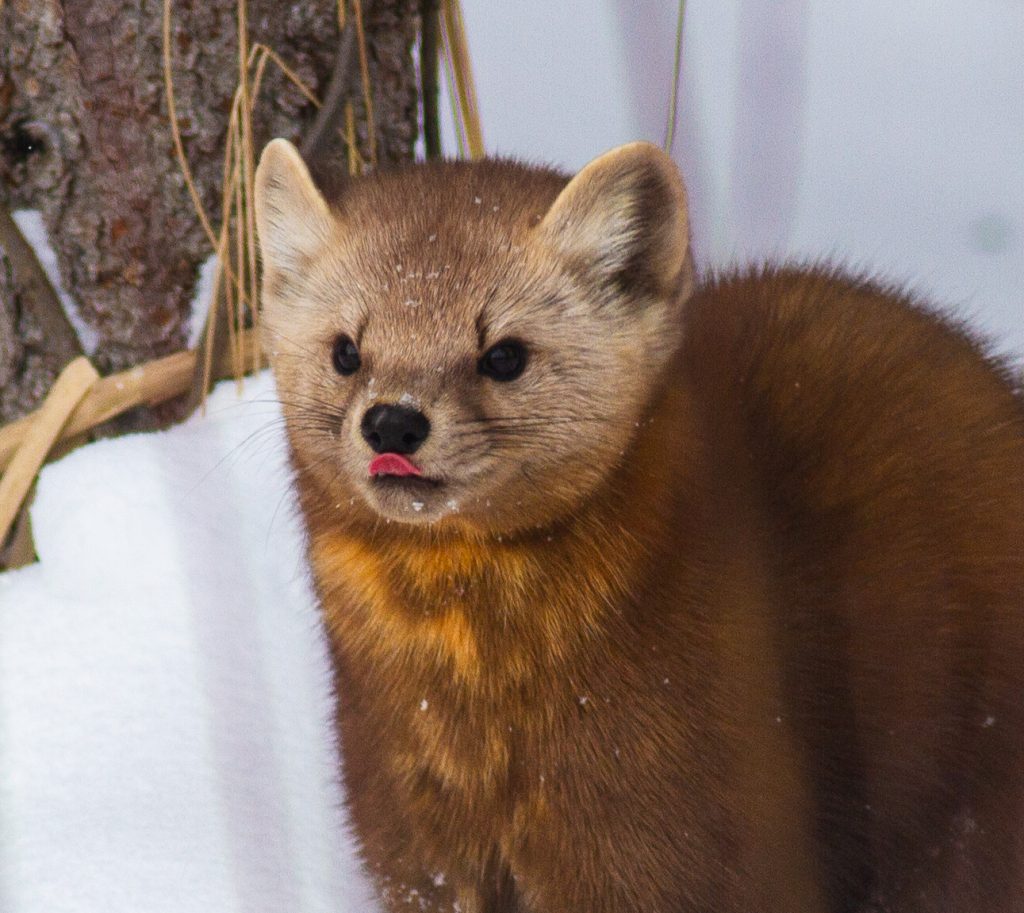
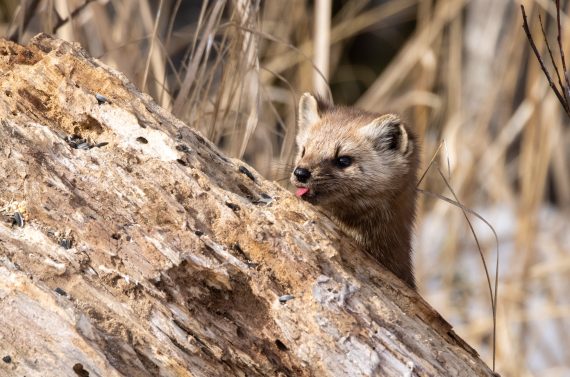
Over the years, American martens have become a winter fixture of the Admiral Road feeding station in the Sax-Zim Bog. These clever members of the weasel family have learned to take advantage of the bird seed and peanut butter folks set out at the feeding station with the goal of attracting deep bog specialists like Boreal Chickadees and Canada Jays, as well as an array of winter finches. Easy food is a rare treat in the wintertime, and these martens have determined the bird feeders are good for weasels too!
During our August 2026 Minnesota Master Naturalist Biome Course, I was hoping that a group of Master Naturalists might be able to use publicly available photos to identify how many martens have shown up to the Admiral Feeders over the years. If we can identify these individual martens, then I hoped we might also be able to track these beautiful weasels across time. Based on reports from visitors, we know that occasionally there has been more than one marten visiting the feeder at a time. But how many of these martens are visiting time and again? This is a question that I have pondered over the last 10 years in the Sax-Zim Bog.
Wherever we have charismatic species in this area, we have folks hoping to see them and take their photos. Luckily, I had a group of folks (Lydia, Kim, and Theresa) interested in reviewing these photos to determine just how many martens we have seen in the Bog, as part of their capstone requirements for their certification as Minnesota Master Naturalists.
Thanks to the photos shared on the FOSZB Facebook Page, iNaturalist, Instagram, and from photos taken by our Executive Director Sparky, the group was able to find a couple hundred photos of martens from the Sax-Zim Bog! The group sorted these photos by date, location, and whether or not you could see the blaze on an individual marten. Any photos that didn’t include location information or dates were excluded, as were any photos that didn’t clearly show the blaze of a given marten.
Wait a minute… what is a blaze?
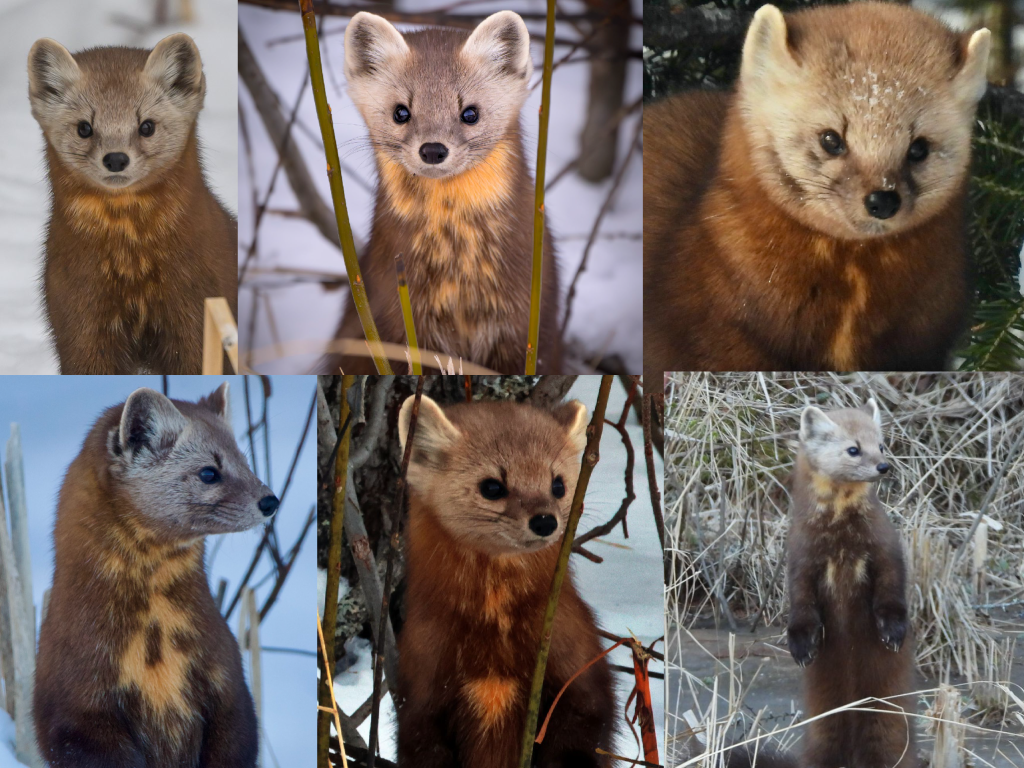
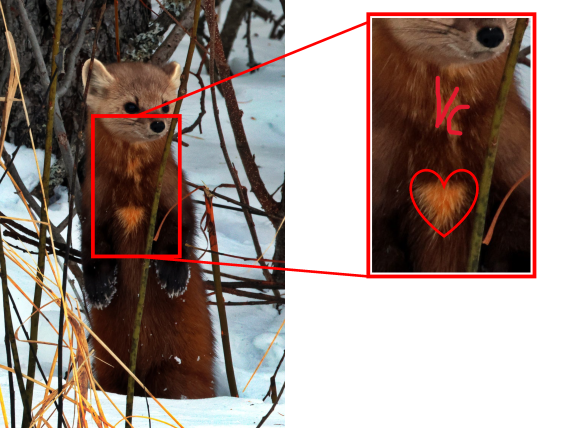
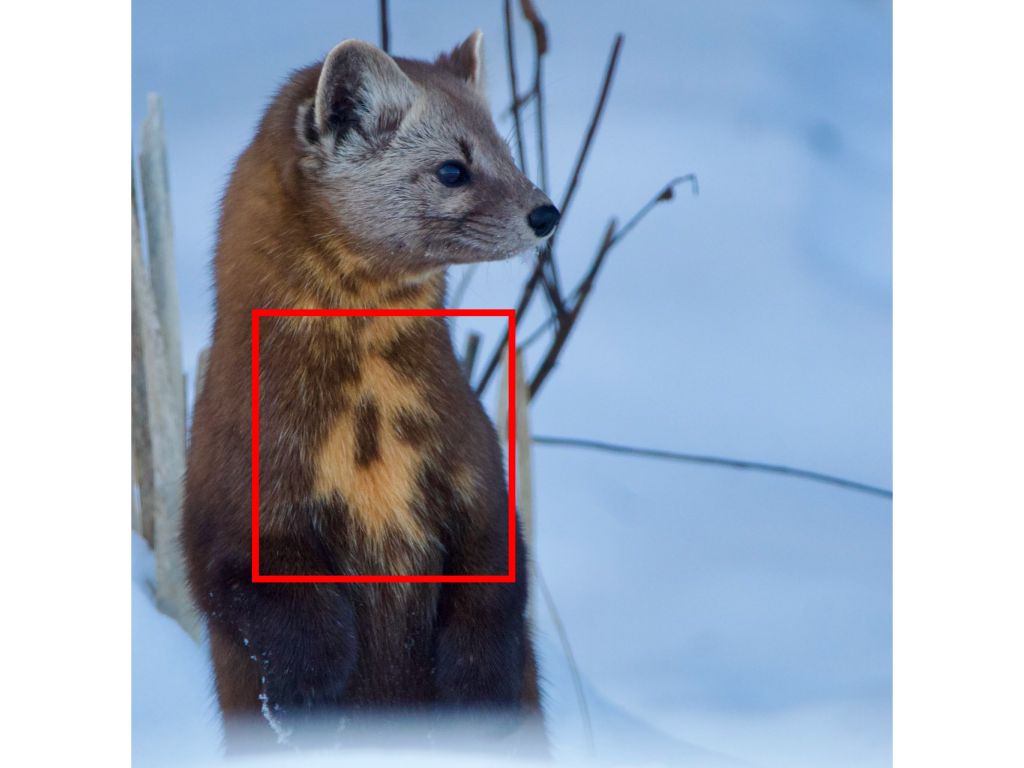
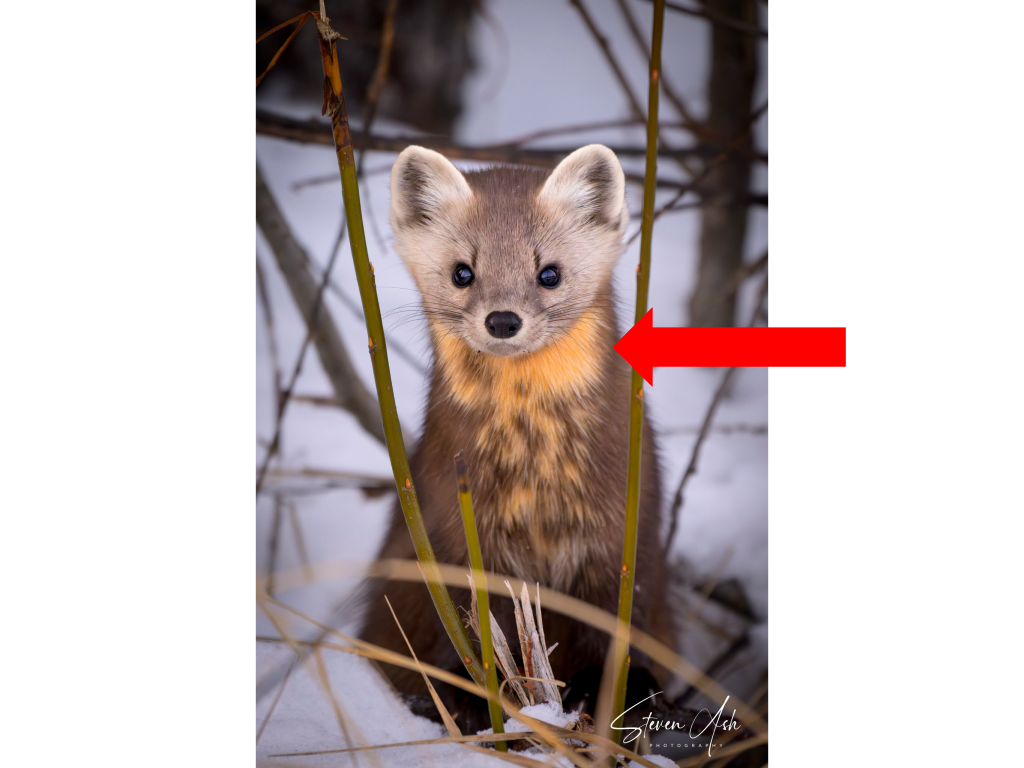
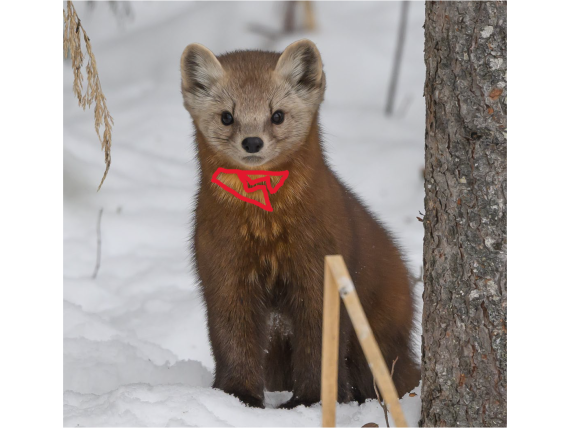
The blaze is the white or creamy colored patch that you see on the throat, chin, chest, and/or groin in weasels. Mink, American Marten, Fisher, Wolverine, and many other weasels have these blazes which can be used to identify individual animals when doing scientific surveys or documenting individuals for other research. Think of blazes a bit like a fingerprint!
The intrepid group of Minnesota Master Naturalists sorted out photos that included the appropriate information and documented a total of 10 individual martens! These martens were given “names” to help better track them in conversations and give some character to the martens in this project. They shared a presentation with the rest of the Minnesota Master Naturalists in the August 2026 Biome Course and we were dazzled by their successes! It turns out that yes indeed, we can ID and track our martens by photo in Sax-Zim Bog! This success also spurred me to take a closer look at the images that I had access to (like Facebook and Sparky’s extensive photo library).
I was able to find 8(!!) additional martens from that photo collection. We were starting to grow quite a database of individuals! Upon closer inspection of photos, one of the martens, VC, turned out to be the same individual as Heart! Minus one marten, but even with that we were able to identify a total of 17 martens visiting the Admiral Road feeder from the winters of 2016-17 to 2025-26.
What a fun citizen science project, but what can we learn from these photos?
If we consider our initial questions, we can indeed identify individual martens based on the photos submitted to citizen science platforms and social media!
The next question to consider was can we track them across time? Yes again! This is dependent on folks wanting to take photos of these animals and is limited to the winter season, even though martens are here all year round (they are just harder to find during the summer!). Tracking martens across time is where our findings get interesting.
From the photos investigated, we were able to determine that there were two winters with no marten photos (COVID winter of 2019-2020 and winter 2017-2018) and only three winters with only one marten photographed (2016-17; 2021-22; 2022-23). The greatest number of martens photographed at the Admiral Road Feeders in a winter were 7 during the winter of 2023-24, with 6 martens photographed in the winter of 2018-19, and 5 martens photographed over the winter of 2024-25.
Four martens were able to be tracked across multiple years, while the additional thirteen martens were only documented for one winter. This doesn’t mean there were simply single photos of these martens, just only one winter with photos that could be confirmed for those individuals. VC Heart has been seen over the course of three winters (’23-24 to ’25-26); Horseshoe was seen over those same winters, with an earlier observation from 2020-21; while Orange Bib was only seen over two winters from 2023-24 to 2024-25.
And then there is this marten named Alligator.
Alligator is a special marten. Not only is she the most documented marten, but she also is the likely mother of at least 3 kits that she has brought to the feeders! Alligator was first photographed (as far as we know!) in the winter of 2016-17. She was then photographed in 2018-19, 2021-22, 2023-24, and 2024-25! This means she was at least 9(!!!!) years old when she was last photographed! In the wild, American Marten might live over 10 years, with the oldest documented marten at 14.5 years old.
She was also identified as a likely female based on her interactions with at least two different “younger” martens during the winter of 2023-2024 and 2024-25. Alligator is likely the mother of at least 3 different kits (2 seen together in 2023-24, with one in 2024-25). We know the identity of at least 2 of the 3 proposed kits, Orange Bib (2024-25) and Necktie (2023-24), but do not have identifiable photos of the second purported kit from the winter of 2023-24.
How do we know she is their mother and not just a tolerant marten?
That question is a little difficult to answer with certainty. Genetics would be a great way to answer this question. But without that level of research, we may never know. However, most weasels do not tolerate other weasels in their territories (let alone their immediate vicinity!), except for mothers and their kits (but only for a certain amount of time). Dr. Michael Joyce, Wildlife Ecologist with NRRI who FOSZB has worked with in the past on fisher and marten research, related to me that dispersal of marten kits from natal ranges is a topic not well studied. If you look at research, most sources state that kits leave their mothers sometime in the fall. But our observations of Alligator with Orange Bib and Necktie, along with some of Dr. Joyce’s own research and observations might indicate they stick around longer than we assumed in the past.
Your observations (and your photos!) help to add to our understanding of these amazing weasels and give more information to folks studying martens. What other questions can be pulled out of our observations? Did we flip long-held assumptions on marten behavior? Is there are a chance we could add to our understanding of marten longevity from these photos? Time will tell!