
Home | About Sax-Zim Bog | Sax-Zim Bog Land Tracts | Warren Nelson Memorial Bog
Size:
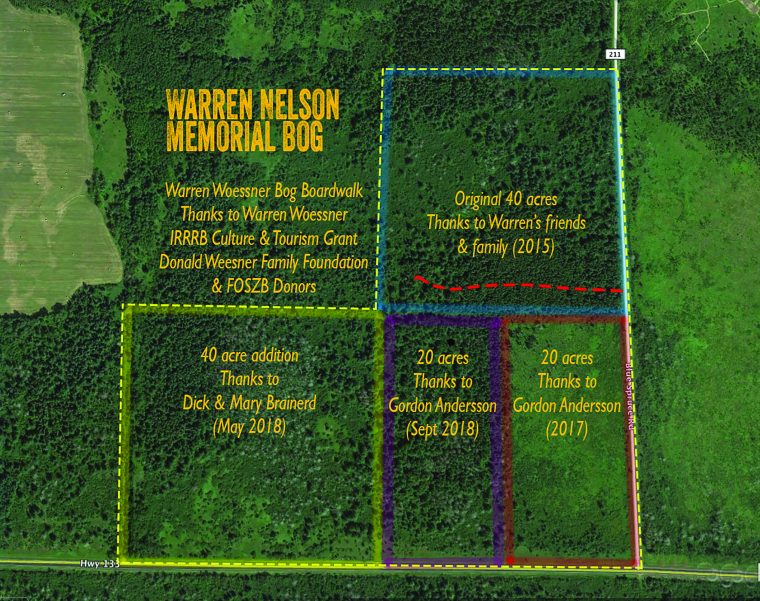
120 acres
Activities at this tract:
Warren Woessner Bog Boardwalk is found at this property; Botrychium Lane Hiking Trail has limited access on the western edge of the property; Feeders maintained at this property during the winter; naturalist activities of all kinds. Information about trails here and here.
Species of Interest:
Black-backed Woodpecker, Canada Jay, Winter Wren, Blackburnian Warbler, Magnolia Warbler; Pink Ladyslipper, Heart-leaved Twayblade, interesting spiders.

Parking:
Two car parking area off of Blue Spruce Road near boardwalk trailhead. In winter: plowed area to the south of this parking pad is accessible when enough snow and cold is present. Roadside parking when parking pad full. Please park on EAST SIDE OF ROAD ONLY!
Signage:
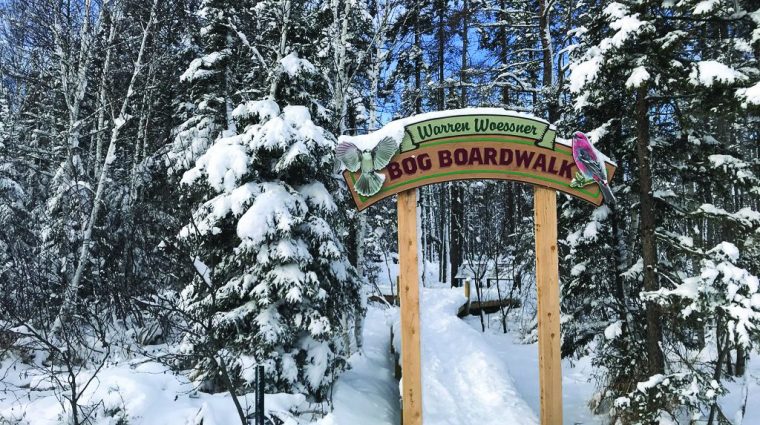
Large Warren Nelson Memorial Bog sign near boardwalk trailhead, as well as Warren Woessner Bog Boardwalk sign above trailhead. Property corner boundaries are marked.

Location:
Property is found west of Blue Spruce Road and north of Hwy 133, bordered by Hwy 133 to the south and west.
Directions:
From Hwy 53: Head west on Hwy 133, crossing Hwy 7. Continue west of Hwy 7 on Hwy 133 to Blue Spruce Road. Head north on Blue Spruce Road and continue for 1/4 mile to the boardwalk trailhead.
Namesake and Donor Notes:
This property is named for Warren Nelson of Aitkin, MN. Warren loved all Minnesota’s birds, but had a special affection for our rarer boreal species. He spent much time observing and learning the natural history of Great Gray Owls, Hawk Owls and Yellow Rails. When Warren passed away, his friends in Aitkin County and beyond wanted to memorialize his significant contributions to the knowledge of boreal birds in northern Minnesota. In his unassuming way, Warren Nelson exemplified human dignity, kindness and compassion. He wove those same traits into his love of birds, and birders. Leading by example, his message was simply to treat other creatures, avian or human, with respect. Warren never asked for anything in return for his birding services or expertise, choosing to give freely of himself with anyone who shared his passion for nature.
To honor Warren’s life while continuing to help promote the birds and habitats that fascinated him, a group of his friends came up with an idea to pay it back, while paying it forward by acquiring a bog parcel of land in Sax-Zim as a memorial. This led to the original 40 acres of this property, one of the first acquired by Friends of Sax-Zim Bog.
Since the initial 40 acres, an additional 80 acres have been added thanks to the donations and support from Gordon Andersson and Richard and Mary Brainerd, bringing the total acres preserved to 120!


The first additions to the Warren Nelson Bog were made by Gordon Andersson with the addition of two adjacent 20 acre parcels, one of which had been logged in the last decade.
The site is growing back nicely into Tamarack and Black Spruce…and as Gordon said, “It’s still habitat for something!” True, Gordon, True. We are planning on eventually adding a spur from the Warren Woessner Bog Boardwalk out into this new parcel…mainly to highlight the regrowth of a Black Spruce/Tamarack bog.
“Every dragonfly, orchid, bird, and moose needs a place to live for a season or through the year. The species may change over time as the vegetation cycles and conditions change. But saving land from building and row-cropping is saving habitat for non-human animal and plant species.”
— Gordon Andersson
The most recent addition to this property features at 40 acre section donated by Richard and Mary Brainerd. This property is an amazing addition and extension of the Warren Nelson Bog, with thick carpets of sphagnum moss and features a diverse forest, in both age and species composition. This property does include a hiking trail, which is summer use only. Here is a note from the Brainerds about this property:
“The Sax Zim Bog is incredibly important in preserving and protecting the birds, animals and vegetation of this beautiful and important area. We are so happy to be able to support the expansion of the preserved land, and we always feel fortunate to have experienced its unique beauty.We hope that more people will have that experience.”
— Richard and Mary Brainerd
